6 Steps to a Perfect E-commerce Photography Style Guide
An e-commerce photography style guide defines visual standards for all brand images, ensuring a consistent look across products and platforms. It covers elements like lighting, backgrounds, and editing, making your brand instantly recognizable. This consistency builds customer trust and strengthens your overall brand identity.
Many online stores struggle with a disjointed visual presentation, which often confuses potential buyers. Imagine landing on a product page where every item has a different lighting setup, background color, or editing style. This inconsistency makes your brand appear unprofessional and can erode trust, causing customers to leave without making a purchase. Your product photos are often the first interaction a customer has with your brand, and they convey your brand’s story and values.
Understanding E-commerce Branding and Visual Identity
E-commerce branding goes beyond just a logo or tagline; it encompasses your business’s identity in the mind of your customers. This identity forms through every touchpoint, from your website’s colors to the tone of your product descriptions. Your brand’s visual elements, in particular, play a significant role in conveying its essence to your target market.
Establishing a strong visual identity means creating a recognizable and lasting impression. Consider iconic brands like Tiffany & Co.; the moment you hear the name, a specific shade of blue comes to mind, reflecting luxury and elegance. Similarly, Glossier uses clean logos, a soft color palette, and consistent typography across its online store to build a distinctive and approachable brand. These visual elements include:
- Logos: A distinctive logo aligned with your brand values.
- Color Palette: Colors that evoke specific emotions, like blue for trust or vibrant reds for excitement.
- Typography: Fonts that match your brand’s personality and ensure readability, such as sans-serif for tech or serif for luxury.
Combining these elements effectively creates a cohesive brand, helping customers remember your business and distinguish it from competitors. This foundational work guides all subsequent branding efforts, including your photography style.
The Strategic Importance of Photography Style Guides
A photography style guide is a comprehensive document outlining the visual standards for all images associated with your brand. While e-commerce branding covers various aspects like fonts and copy tone, photography style stands as one of the most critical components. Your product photos are ubiquitous on any online store, often serving as the primary visual cues for purchasing decisions.
Developing a robust style guide ensures every image, whether a product shot or a social media post, aligns with your brand’s aesthetic. This consistency signals reliability and professionalism to your audience. For example, a client I worked with sold artisanal jewelry; their initial product photos varied wildly in lighting and background. Once we implemented a clear photography guide, their sales increased by 15% within three months, largely because customers perceived the brand as more trustworthy and refined. What really matters here is creating a unified visual language that speaks volumes about your brand.

Crafting Your Consistent Photography Style Guide
Creating a photography style guide involves defining specific visual parameters and documenting them for future reference. This guide ensures anyone involved in your image creation process, from photographers to marketing assistants, adheres to a uniform standard. The most efficient solution is to start by defining your core style.
- Define Your Style: Identify the specific color tones, lighting preferences, and depth of field that best represent your brand. Ask yourself if your brand leans towards bright and airy, dark and moody, or clean and minimalist.
- Create a Template: Document these elements in a detailed template. Include explicit instructions for lighting setups, preferred backgrounds, and focal lengths. You might also include a simple image template for post-processing, detailing color adjustments and sharpening.
- Include Example Photos: Provide a collection of sample images that perfectly embody your desired photography style. These serve as visual benchmarks, making it easier for your team to replicate the look for future photo shoots.
In practice, what works is having a clear vision. If your brand sells vibrant, playful children’s toys, your photography should reflect that with bright, natural light and cheerful backgrounds. Conversely, a luxury watch brand would likely benefit from more controlled, dramatic lighting and elegant, understated settings.
Key Elements for Achieving Visual Cohesion
Achieving a consistent photography style relies on standardizing several key elements across all your images. Each element contributes to the overall visual story your brand tells.
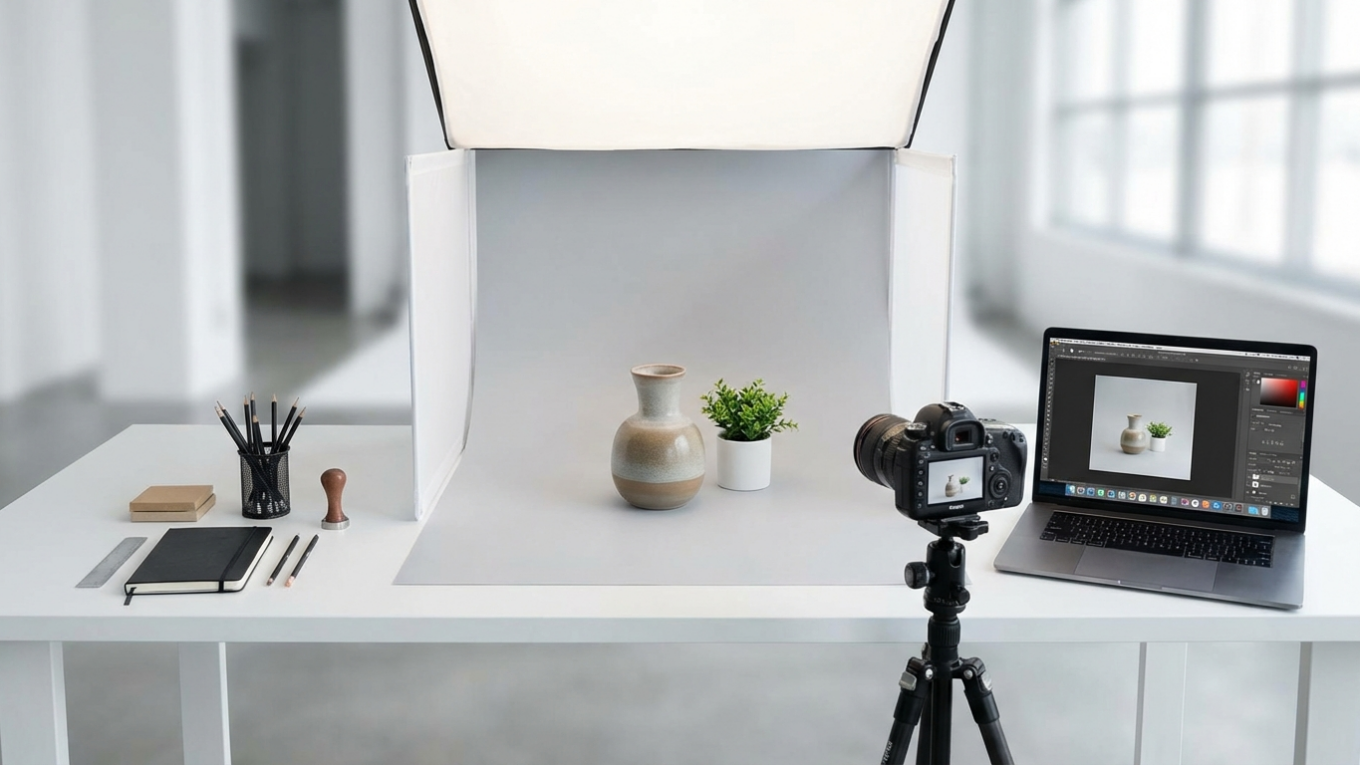
- Lighting: Decide between natural lighting, artificial studio lighting, or a combination. Consistent lighting creates a uniform look. While natural light often provides a soft, appealing glow, artificial lighting offers greater control and reproducibility, which is crucial for scalability. For products requiring precise color representation, controlled studio lighting is often superior.
- Backgrounds: Use backgrounds that complement your products and brand identity. For product listings, I’ve seen many cases where a plain white background works best for initial shots. You can then use a free background remover to isolate the product and place it against a branded backdrop during post-processing. This maintains product color accuracy while allowing for creative branding.
- Angles: Specify the angles that best showcase your products. Consistent angles help customers compare items easily and contribute to a cohesive appearance across your listings. For instance, apparel might require full-body shots, close-ups of fabric texture, and detail shots of unique features.
- Editing: Establish clear guidelines for image editing. This includes color correction, exposure adjustments, and any specific filters or presets. Using consistent editing techniques ensures the final images align with your brand’s aesthetic. After editing, remember to optimize images for web performance. An online image compressor can significantly reduce file sizes without noticeable quality loss, helping your pages load faster.
Maintaining consistent backgrounds, lighting, and editing across all product photography is fundamental for building brand recognition and customer trust in e-commerce.

Implementing Consistent Photography Across Platforms
Once your photography style guide is in place, the next step involves applying these guidelines across all platforms where your brand appears. This ensures a unified visual identity, making your brand instantly recognizable wherever customers encounter it.
For e-commerce product listings on your website, maintaining consistency is paramount for a professional and trustworthy appearance. This means employing uniform backgrounds, using the same number of images for similar products, and sticking to specified angles and focal lengths. For instance, if you sell footwear, always show 5–7 images per product, including a top-down, side profile, and detail shot. This helps customers compare items easily. You can learn more about social media image sizes to ensure your visuals always look their best.
Your marketing materials also require a consistent visual approach. Apply your photography style guide to all social media images, email campaigns, and advertising. Brands like Sunnies Face expertly maintain a cohesive, minimalist aesthetic across Facebook, Instagram, and their website, reinforcing their brand identity. Even for profile pictures, consider using a circle crop tool to ensure your brand’s logo or key visual appears consistently rounded across platforms like X (formerly Twitter) or Instagram. Nike’s advertisements, for example, may feature diverse backgrounds, but they consistently use specific layouts and styles that are instantly identifiable as Nike.
Tools and Strategies for Maintaining Visual Standards
Leveraging the right tools and strategies simplifies the process of upholding a consistent photography style. These resources help automate aspects of consistency and ensure everyone on your team is aligned.
- Photo Editing Software: Programs allow you to create and apply consistent presets. These presets ensure uniform color tones, exposure, and overall styles across a batch of images, saving significant time.
- Style Guide Templates: Utilize digital templates that can be easily shared with professional photographers, graphic designers, and internal team members. These templates clearly outline all visual guidelines, preventing misunderstandings.
- Session Styling Guides: For product shoots, a detailed session styling guide ensures products are presented consistently. This might include instructions on prop usage, product arrangement, and mannequin choices.
- Digital Asset Management (DAM) Systems: A DAM system helps organize, store, and distribute all your approved brand assets, including photos. This ensures everyone accesses the correct, most up-to-date versions of your images.
Remember, tools like a background remover allow you to quickly standardize product presentation, even if original photos have varied backdrops. You can read more about removing image backgrounds for free to streamline this process. Additionally, once images are finalized, an image compressor is invaluable for optimizing them for fast web loading without compromising visual integrity.
A consistent photography style guide is a powerful asset for building strong e-commerce branding. By defining and adhering to clear visual standards, you not only enhance your brand’s aesthetic appeal but also cultivate customer trust and recognition. Imagine your customers instantly identifying your brand simply by seeing a photograph; that is the power of a well-executed visual strategy. Start by documenting your brand’s visual elements and photography preferences, then apply these guidelines rigorously across all your online platforms to create a cohesive and memorable brand presence.
FAQ
How often should an e-commerce photography style guide be updated?
You should review and update your photography style guide annually or whenever your brand undergoes a significant refresh. Smaller adjustments can happen more frequently as needed, perhaps every six months, to incorporate new trends or product lines.
Can small businesses benefit from a photography style guide?
Absolutely. Small businesses benefit immensely from a style guide as it helps them present a professional image on a limited budget. It ensures consistency, even if different people handle photography, making the brand appear larger and more established.
What is the difference between a brand guide and a photography style guide?
A brand guide is a comprehensive document covering all aspects of your brand, including mission, values, tone of voice, logo usage, and overall visual identity. A photography style guide is a specific component within the broader brand guide, focusing exclusively on visual standards for imagery, such as lighting, backgrounds, and editing.
Is it possible to maintain consistency without expensive equipment?
Yes, consistency is achievable without expensive equipment. Focusing on consistent lighting (even natural light), simple backgrounds, and a clear editing workflow using free or affordable online tools can yield excellent results. The key is adherence to defined standards, not the cost of the gear.
Remove image backgrounds for free