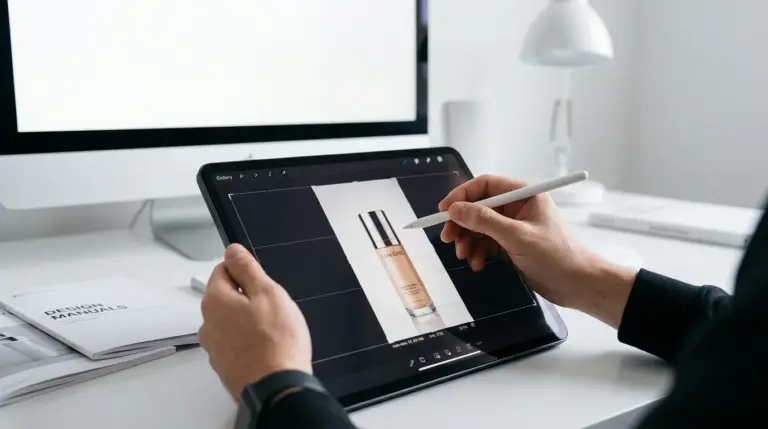
Skill Stacking: 6 Ways to Land Big Photography Gigs in 2026
Having multiple skills gives you a massive edge because clients buy finished business outcomes, not isolated photography tasks. When you can handle capture, high-end retouching, and delivery, you effectively eliminate handoffs, speed up internal approvals, and make yourself much easier to hire for large commercial projects. You aren’t just a freelancer anymore; you’re a one-person production house.
Picture the situation: a brand hires you for what sounds like a narrow task, maybe dust cleanup on a stainless-steel watch, color correction on a leather strap, or a few export-ready JPEGs for an online store. Then the inevitable question lands in your inbox: can you also shoot replacement angles, trim a short promo clip, or prep web-ready files that won’t tank the site speed? That’s where single-skill freelancers hit a wall. They have to say no, or worse, they outsource it and lose control over the quality.
The Brillier Watches story matters because it shows how skill stacking for photographers works in real commercial conditions. A simple retouching request turned into a broader creative role because the useful skill was not “doing everything.” It was combining adjacent technical strengths into one reliable workflow: macro photography, high-end retouching, lighting setups, motion content, and basic publishing awareness. If you want the same kind of opportunity, the goal is not to become a generalist. It’s to build a tight power stack around one commercial niche where you can solve every visual problem the client has.
What is the advantage of having multiple skills in a competitive market?
The advantage of having multiple skills is simple: each extra competence removes friction for the client and increases your billable surface area. In commercial photography, that matters more than vague creativity. A brand manager who can hire one person to solve capture, retouching, and delivery problems gets fewer handoffs, fewer revision loops, and less brand inconsistency. That’s a far stronger offer in a market where companies expect faster turnaround and cleaner execution. It works because it’s practical.
This is where the of having many skills becomes concrete. If you understand macro photography, you can shoot the tiny bevels and polished edges a watch brand cares about. But if you also understand post-processing workflow and color management, you can keep metal tones believable instead of turning them muddy or blue. Besides, if you understand basic ecommerce constraints, you won’t hand over beautiful files that are difficult to publish. Industry coverage on photography career development keeps returning to the same reality: commercial work rewards people who solve broader production problems, not just one narrow task. Since you’re handling the whole chain, the final product looks like it came from a single cohesive vision.
Yet, there is a limitation. Having multiple skills only helps when those proficiencies reinforce each other. If your added skills are random—say, wedding photography plus drone licensing plus social media management—clients don’t see more value; they see a fuzzy, unfocused offer. Still, you should skip the “I do everything” pitch if your core technical anchor is weak. For luxury product work, your anchor should sit in one of these areas: precision lighting, high-end retouching, or controlled macro capture. Once that’s solid, you can add the rest.
| Approach | What the client buys | Typical weakness | Why stacked skills win |
|---|---|---|---|
| Single-skill retoucher | Cleanup only | Can’t replace missing angles or fix bad capture decisions | Stacked talent can rescue the full asset pipeline when things go wrong |
| Single-skill shooter | Raw product photos | Hands off complex reflections, dust cleanup, and web prep | Stacked talent delivers finished commercial assets ready for the storefront |
| Stacked commercial specialist | Capture, retouching, short-form motion, delivery guidance | Can be spread thin if no niche focus | Higher trust, larger project scope, and significantly fewer vendors to manage |
- More value: you can invoice for more than one project component, increasing your average deal size.
- Better client acquisition: your offer sounds safer to brands with small teams who lack their own internal editors.
- Stronger brand storytelling: stills, detail shots, and motion feel like one campaign because the same eye created them.
- Higher retention: clients return when you reduce coordination headaches and deliver exactly what their web team needs.
How does skill stacking help you land high-end clients like Brillier Watches?
Skill stacking helps you land high-end clients when Skill A multiplies the value of Skill B. That’s the real mechanism at play. Retouching alone can make a photo cleaner, but retouching plus product-lighting judgment makes the final image feel expensive and deliberate. Even though video editing alone can cut clips together, product photography plus motion planning creates a coherent luxury campaign. That’s how a simple assignment can expand into a long-term account without you ever having to hard-sell.
In a case like Brillier Watches, the path is easy to map. The first job was retouching existing product images. That established trust around detail, surface control, and premium finish. Once the client saw that the visual language was understood, adjacent skills became commercially useful: short promotional video, lifestyle imagery, and even small website optimization suggestions. Then again, that’s a textbook example of commercial photography versatility creating more work without a new pitch deck every week. You aren’t just taking photos; you’re consulting on the brand’s visual identity.
There’s an important disqualifier here. This approach won’t work if you try to jump straight into premium-brand language without proof. Luxury clients don’t care that you watched a few tutorials on focus stacking or learned a new edit trick last month. They care whether your current work shows consistency, restraint, and awareness of industry standards. Unless your portfolio shows you can handle the basics of polished metal and glass, don’t try to pitch the “full-service” package yet. Not always fast, but always right.
| Single-skill project | Billable components | Stacked-skill project | Billable components |
|---|---|---|---|
| Retouch 10 product photos | Cleanup, export | Retouch + reshoot + motion cutdown | Creative planning, capture, retouching, edit, delivery |
| Basic ecommerce shoot | Studio session only | Ecommerce + campaign support | Studio, lifestyle set, alternate crops, web prep |
| Portfolio sample | One visual outcome | Mini case study | Problem, process, final assets, commercial rationale |
If you want a stronger foundation before pitching watch or jewelry work, it helps to study the production discipline behind stunning product photography in 2026. The jump to premium clients usually comes from tighter execution and understanding the client’s business needs, not just louder self-promotion.
Three power pairs that actually move you upmarket
- Lighting + Retouching: Better reflections in camera mean less destructive editing and more believable metal, glass, and sapphire crystal surfaces. You spend less time fixing and more time perfecting.
- Macro Capture + Focus Stacking: Small watch details stay sharp without the harsh look of pushing one frame too far in post. It creates that hyper-real depth that luxury buyers expect.
- Photography + Brand Storytelling: A clean hero shot plus a short motion clip gives the client campaign material, not just isolated files. It makes the transition from social media to the checkout page feel.
What does a stacked-skill workflow look like in a watch macro session?
A stacked-skill workflow for watch photography means planning capture, retouching, and delivery together before the first frame is shot. This matters because watches are unforgiving subjects. You’re dealing with tiny engravings, reflective steel, polished bezels, lume details, dust, fingerprints, and shallow depth of field. If one stage is weak, every later stage gets slower and more expensive. Plus, your client’s patience for revisions is usually thin when deadlines are looming.
Imagine a realistic technical workflow breakdown for a Brillier-style session. It starts with a shot list divided into three buckets: straight ecommerce views, luxury detail macros, and brand-story images. Then come lighting setups: one controlled setup for even dial legibility, one for edge highlights on the case, and one softer environment-driven setup for lifestyle mood. Focus stacking becomes useful when the crown, indices, and strap hardware cannot all stay sharp in a single frame without sacrificing optical quality. While it feels like extra work, it’s actually standard commercial problem-solving for small premium objects.
After capture, the retouching stage has to stay disciplined. High-end retouching on watches is not just dust removal with extra contrast. It includes careful blemish cleanup, tonal balance, selective contrast, reflection control, and consistency between product variants. Many newer freelancers are surprised by this: most of the premium look comes from restraint, not aggressive effects. Over-retouch metal and it starts looking like poor 3D render work. Plus, if the client needs transparent cutouts for quick social media mockups, using a background remover can help with fast drafts or internal review sets before you commit to the final hand-cut masks.
- Pre-production: define hero angle, macro detail targets, and final usage sizes.
- Capture: shoot tethered, lock composition, and refine reflections before firing the full volume.
- Focus control: use focus stacking only where detail depth truly requires it to maintain a natural feel.
- Retouching: remove dust, manage highlights, and protect engraved or brushed textures at all costs.
- Delivery: export separate files for storefront, social, and print-safe review.
| Workflow stage | Main skill | Commercial impact |
|---|---|---|
| Shot planning | Brand storytelling | Assets match campaign intent instead of feeling random or disconnected |
| Lighting | Reflection control | Less retouch time and much more believable materials in the final shot |
| Macro capture | Focus stacking judgment | Sharper details without the ugly look of over-sharpening in post-processing |
| Post-production | High-end retouching | Premium finish suitable for high-margin commercial contracts and print ads |
| Export prep | Web delivery awareness | Cleaner uploads for ecommerce and faster approvals from the dev team |
Why is versatility essential for modern product photographers?
Versatility is essential because product photography now sits inside a content system, not a single-file handoff. A brand might need a homepage hero, collection thumbnails, social crops, short-form video, and marketplace images all from the same shoot. If you solve only one slice, you’re useful. But if you understand the whole chain, you become impossible to replace. That matters when budgets get tight and clients start looking to consolidate their vendor lists.
This is especially true for ecommerce. Shopify documentation says product and collection images can be up to 5000 x 5000 px and under 20 MB, but notes that square product images around 2048 x 2048 px often display best. While that sounds like a technical footnote, it changes how you deliver files. A visually strong image that is clumsy to publish still creates friction for the client. That’s why commercial photography versatility now includes delivery literacy, not just camera skill. Still, for product teams, speed and ease of use matter almost as much as aesthetics.
On the web side, MDN documentation on lazy loading is a useful reminder that images are part of performance, not decoration. Knowing when a storefront image should be compressed, resized, or deferred gives you an edge when working with brands that care about SEO and conversion rates. Plus, since your portfolio site is likely image-heavy, learn from guides on responsive images and srcset and use an online image compressor before publishing client-facing case studies. It shows you practice what you preach.
- Stills are not enough when the client also needs short-form motion for TikTok or Reels.
- Raw quality is not enough when the site needs lighter files and consistent dimensions across the catalog.
- Good taste is not enough when the storefront team needs predictable, ready-to-use deliverables.
- Versatility is not infinite breadth; it’s adjacent competence around one specific niche.
How can you present multiple technical skills effectively in a portfolio?
You present multiple technical skills effectively by showing one business problem solved across several stages, not by dumping unrelated categories on one page. A strong portfolio for having multiple skills should read like a case file: what the product was, what visual problems it had, which technical decisions were made, and what assets were delivered. That structure tells a client you understand outcomes, not just aesthetics. It builds trust before you even have a first meeting.
Many photographers run into the same issue: the portfolio shows attractive images, but clients still ask whether you can handle retouching or web crops. That is usually a presentation problem. Instead of separate galleries called macro, retouching, and video, build mini case studies. Show the hero image, one detail crop, one before-and-after retouch example, and a short note on final usage. For example, mention that you prepared ecommerce-ready deliverables or transparent cutouts. Even though it’s more work to write, the story makes the stack believable. If you need to quickly show how a watch face looks in a circular ad, using a circle image cropper for your case study mockups is a great touch.
There’s also a hard limitation here. Don’t fake depth with jargon. If you mention color management, focus stacking, or commercial contracts, your examples need to support those claims. One weak page can damage trust faster than three solid ones can build it. For premium product work, fewer case studies with tighter narrative usually beat a giant mixed portfolio every time. Keep it sharp and focused on the value you provided to the brand.
For complementary inspiration on presenting polished image workflows, it helps to read about ghost mannequin photography for ecommerce. Different niche, same core lesson: clients pay more when your process looks deliberate, repeatable, and solves their specific headaches.
A practical portfolio checklist
- Lead with one niche: watches, jewelry, cosmetics, or another detail-heavy product class.
- Show process evidence: lighting diagrams, capture notes, or a brief retouching rationale.
- Include at least one before-and-after example with a brief technical explanation of the challenges faced.
- Name deliverables specifically: hero image, macro detail, social crop, and short motion asset.
- Make the site fast and readable; your presentation is effectively the first part of your pitch.
Which three force-multiplier skills should you add first?
The best three force-multiplier skills for a product photographer are precision lighting, retouching discipline, and delivery strategy. That order matters because it follows the lifecycle of an image. Lighting improves the raw material. Retouching protects the premium finish. Delivery strategy makes the work usable in the client’s actual business. Together, those three skills do more for your career than collecting five random software tricks or trendy filters.
Start with lighting if your images still rely on “fix-it-later” thinking. In luxury product work, the cleanest reflections are planned, flagged, and shaped in camera. Then add retouching discipline: dust removal, seam cleanup, and believable material rendering. Finally, build delivery strategy by understanding aspect ratios, file formats, and web optimization. If you need a practical extension of this thinking, the ecosystem guide on perfect white background product photos without editing is useful because it shows how much quality can be gained before post-production even begins.
Don’t start with advanced motion graphics, 3D, or trendy AI workflows unless your client base already demands them. Those can be valuable, but they are not the first step for most photographers trying to move into high-margin commercial work. Build the stack that makes your core offer sharper, faster, and easier to buy. That’s the part people skip, and it costs them better contracts. For photographers serious about having multiple skills, these three additions create the clearest commercial lift because each one strengthens the same client workflow instead of pulling your offer in different directions.
| Skill | Why add it first | Skip this first if |
|---|---|---|
| Precision lighting | Improves every frame before editing starts, saving hours of post-processing | You still lack basic control over exposure and fundamental composition |
| Retouching discipline | Turns decent capture into premium deliverables suitable for luxury brands | You’re using retouching primarily to rescue fundamentally bad or lazy captures |
| Delivery strategy | Makes your work immediately usable for ecommerce, ads, and web teams | You haven’t defined your target client or specific product category yet |
- Pick one product category so your portfolio diversification still looks focused and professional.
- Choose one anchor skill you already perform well under client pressure.
- Add one finishing skill and one delivery or storytelling skill around that anchor.
- Build one case study that shows the full process from initial capture to final usable assets.
- Send that case study to a short list of brands whose visual problems match your new stack.
Your next move is not to learn ten things at once. Pick one product category, choose one anchor skill you already do well, then add the next two adjacent skills that make clients trust you with a bigger slice of the job. Build one case study around that stack, send it to five brands whose visual problems you can clearly solve, and make your pitch about commercial usefulness and results, not just your artistic taste. They care about their bottom line, and so should you.
Having multiple skills pays off when those proficiencies connect into one commercial workflow that saves the client time and raises the quality of the final assets. Start with one technical anchor, add two adjacent force multipliers, and present the result as a tight case study built for real client acquisition, cleaner delivery, and stronger commercial contracts. In 2026, the best photographers aren’t just taking photos—they’re building visual solutions.
If your next step is find the best seo tools for 2026. this guide compares 11 top platforms like semrush and ahrefs by use case to help you build a winning stack, What Are the Best SEO Tools for Your Business in 2026? is a dedicated option for that workflow.
FAQ
Does having multiple skills mean you should market yourself as a generalist?
No. You’ll look far stronger as a specialist with supporting capabilities. Clients pay more when your core niche is obvious and your extra skills clearly strengthen that niche, such as combining macro capture with high-end retouching and ecommerce delivery.
What’s the biggest mistake photographers make when they try skill stacking?
They add disconnected skills that don’t increase their commercial value. A strong stack reduces friction inside the same client workflow, whereas a scattered stack makes your brand look confused and unprofessional.
Can skill stacking help if you don’t want luxury watch clients?
Yes. The same logic applies to cosmetics, jewelry, food, and footwear. The subject changes, but the value proposition remains identical: you solve capture, finishing, and delivery as a single, cohesive service.
Should you learn video before improving your retouching?
Usually not. If your still images aren’t consistently strong, video won’t fix your core offer. For most product photographers, mastering lighting and retouching first provides a much faster return on investment.
How many skills are enough before you pitch bigger clients?
Three tightly connected skills are often enough: one anchor skill (like lighting), one finishing skill (like retouching), and one delivery skill (like web optimization). Depth in a few areas is always more reliable than shallow breadth.
Remove image backgrounds for free